Services
Electrocautery for Warts
Warts are common skin growths caused by certain types of human papillomavirus (HPV). They may appear on the hands, feet, face, or other parts of the body and can sometimes cause discomfort, irritation, or cosmetic concerns.
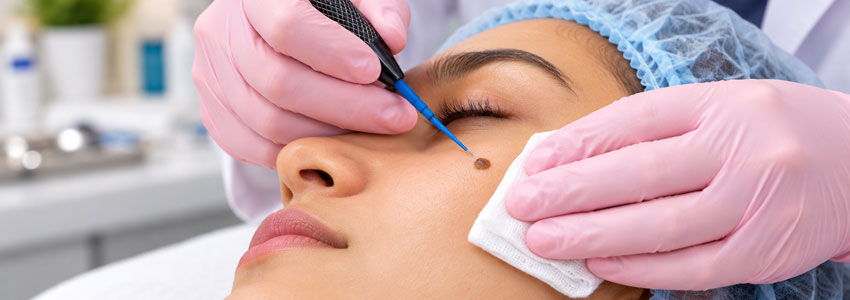
Electrocautery is a dermatological procedure that uses controlled electrical heat to remove selected skin growths. Dr. Ranjita Kannattukunnel assesses the wart and surrounding skin to determine whether electrocautery is an appropriate treatment option.
When Is Electrocautery Considered?
The choice of treatment depends on the type, size, location, and number of warts. After examining the affected area, a dermatologist can recommend electrocautery or another suitable treatment based on your individual needs.
- Assessment of warts and other skin growths
- Evaluation of the size and location of the affected area
- Discussion of suitable wart removal options
- Treatment planning based on individual skin concerns
How Does the Procedure Work?
During electrocautery, a specialised device uses controlled heat to destroy the targeted tissue. Local anaesthesia may be used depending on the size and location of the wart and the procedure being performed.
The procedure is performed by a trained medical professional. After treatment, the area may develop a small scab and require time to heal. The healing period depends on the size and location of the treated area.
Aftercare Following Wart Removal
Proper aftercare helps protect the treated area while it heals. Follow the instructions provided by your dermatologist and avoid picking at scabs or irritating the skin.
- Keep the treated area clean and follow wound-care instructions
- Avoid picking, scratching, or rubbing the healing skin
- Use prescribed ointments or dressings as advised
- Attend follow-up appointments if recommended
Is Electrocautery Suitable for Every Wart?
Electrocautery is not the right option for every wart or skin growth. The suitability of treatment depends on the diagnosis, location, and individual health factors. Possible risks include temporary discomfort, scarring, changes in skin colour, infection, and recurrence of the wart.
Avoid attempting to burn, cut, or remove warts at home, particularly on the face or sensitive areas. A dermatological assessment can help ensure that the growth is correctly identified and managed appropriately.
Wart Treatment with Dr. Ranjita Kannattukunnel
Dr. Ranjita Kannattukunnel provides dermatological assessment for warts and selected skin growths, helping patients understand suitable removal options and the care required after treatment.
Book a consultation with Dr. Ranjita Kannattukunnel to have your skin growth assessed and discuss whether electrocautery is suitable for you.