Services
Skin Growth Removal
Skin growths such as skin tags, warts, and certain benign lesions are common and may develop on different parts of the body. While many are harmless, some may cause irritation, discomfort, or cosmetic concerns, particularly when they rub against clothing or jewellery.
Dr. Ranjita Kannattukunnel provides dermatological assessment of skin growths to determine their nature and discuss suitable removal options. The recommended approach depends on the type, size, location, and appearance of the growth.
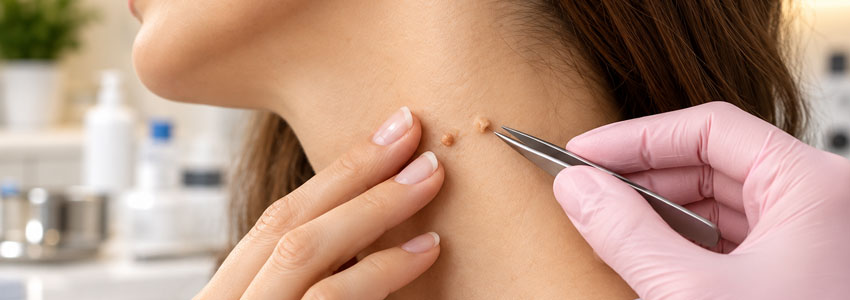
Types of Skin Growths Assessed
Different skin growths may look similar but can require different approaches. A dermatological examination helps identify the concern and determine whether removal is appropriate.
- Skin Tags: Small, soft growths that commonly appear around the neck, underarms, and skin folds.
- Warts: Firm or rough growths caused by certain types of human papillomavirus (HPV).
- Benign Skin Lesions: Certain non-cancerous growths that may cause irritation or cosmetic concerns.
- Other Skin Growths: Unusual or changing lesions that need assessment before any removal procedure.
Skin Growth Assessment and Removal Options
Before recommending removal, the dermatologist examines the growth and reviews relevant symptoms and medical history. Depending on the diagnosis, suitable options may include electrocautery or another appropriate dermatological procedure.
- Examination of the skin growth and surrounding area
- Assessment of whether removal is medically or cosmetically appropriate
- Selection of a suitable procedure based on the diagnosis
- Explanation of the procedure, possible risks, and expected healing
- Aftercare instructions and follow-up guidance when required
What to Expect After Skin Growth Removal
Recovery depends on the removal method, the size of the growth, and the area treated. Temporary redness, tenderness, a small scab, or changes in skin colour may occur. Following the recommended wound-care instructions can help protect the treated area while it heals.
The possibility of scarring or recurrence varies according to the type of growth and procedure used. Your dermatologist can explain the relevant risks and aftercare before treatment.
When Should You Consult a Dermatologist?
Consider a consultation if a skin growth causes irritation, discomfort, or cosmetic concern. Any growth that changes in size, shape, or colour, bleeds without an obvious cause, or develops a persistent sore should be assessed before removal.
Avoid cutting, burning, or removing skin growths at home. Professional assessment helps ensure that the growth is correctly identified and that an appropriate treatment option is considered.
Skin Care with Dr. Ranjita Kannattukunnel
Dr. Ranjita Kannattukunnel provides patient-focused dermatological assessment for skin growths, helping patients understand their condition, suitable removal options, and the care needed after a procedure.
Book a consultation with Dr. Ranjita Kannattukunnel to have your skin growth assessed and discuss appropriate treatment options.